Open Lab Day @ISR-UC
Open Lab Day @ISR-UC
2026 Edition
2026 Edition
Speakers
Talk #1 The Little Brain project at Champalimaud
Understanding how integrated neural architectures generate coherent behaviors remains a primary challenge in neuroscience. The Little Brain Project is a research proposal aimed at understanding brain function and neural circuits through the lens of evolutionary processes. Moving away from isolated circuit analysis, this nascent project leverages Braitenberg’s synthetic psychology and Brooks’ subsumption architecture to investigate how complex adaptive behaviors emerge across phylogenetic evolution from integrated sensorimotor loops. To support this effort, we introduce the Little Brain Project (LBP) Simulator, a newly developed platform integrating PyTorch-based neural networks with MuJoCo physics and real robots. The environment simulates multimodal interactions—such as visual retinas, active whisker sensing, and polarized light navigation—alongside neural features like ring attractors and neuromodulated internal states. Future milestones will introduce neuromodulator-driven Hebbian learning, using systematically evolved physical robots to investigate how integrated neural architectures generate coherent adaptive behaviors.

Hugo Gravato Marques graduated with a degree in Computer Engineering from the Faculty of Engineering of the University of Porto. He earned his PhD at the University of Essex under the supervision of Owen Holland, where he developed computational architectures to endow artificial systems with imagination-like capabilities.He then completed postdoctoral research at the University of Zurich and ETH Zurich in the laboratories of Rolf Pfeifer and Fumiya Iida, focusing on bio-inspired control strategies for anthropomimetic robots. Afterwards, he joined Megan Carey’s laboratory at the Champalimaud Foundation in Lisbon as a postdoctoral researcher, utilizing electrophysiology and imaging techniques to investigate locomotor coordination and learning in the mouse cerebellum. Currently, he serves as the Head of the Teaching Lab at the Champalimaud Foundation. In this role, he contributes to the doctoral program and advanced Cajal neuroscience courses while collaborating on several research projects across the institute.
Talk #2 Testing and Experimentation Facilities for AI and Robotics
Innovation in healthcare does not end with developing a technology. To reach the market and achieve adoption, a solution must demonstrate safety, performance, clinical benefit, regulatory compliance, and value for both patients and healthcare systems. This talk will explore the key challenges faced by medtech start-ups and show how a European testing and validation network can support the development, clinical evaluation, regulatory readiness, and market access of AI- and robotics-enabled medical devices. It will introduce the AI innovation lifecycle and the role of Testing and Experimentation Facilities (TEFs), including TEF-Health.
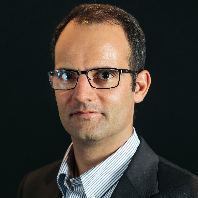
António Cunha, Eng.
Executive Director of IPN Health Proof at Instituto Pedro Nunes
Talk #3 Microgrids and Data Centers: Challenges and Opportunities in the Transition to Smart and Sustainable Energy Systems
The growing electrification of society and the rapid expansion of digitalization are profoundly transforming energy systems. Microgrids and data centers represent two key technologies in this transition: on the one hand, microgrids enable the integration of distributed energy resources, renewable generation, storage, and smart management strategies, thereby increasing the flexibility, efficiency, and resilience of electric grids; on the other hand, data centers play a central role in the digital economy, driven by the growth of computing power, artificial intelligence, and digital services, but posing new challenges due to their high energy consumption. This presentation will explore the principles, challenges, and opportunities associated with these two types of infrastructure, analyzing their impact on the future of electric systems, particularly in terms of energy efficiency, renewable energy integration, grid flexibility, and sustainability.
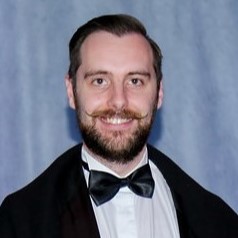
Alexandre Matias Correia, Eng.
Researcher at the Institute of Systems and Robotics
Alexandre Filipe Matias Correia is a Ph.D. student in Electrical and Computer Engineering. A native of Tavira, in the Algarve, he came to study electrical engineering in 2011, where he earned a master’s degree in the field of energy. He is currently a researcher at the University of Coimbra’s Institute of Systems and Robotics, in the Intelligent Energy Management Office. His areas of study include microgrids, electric vehicles, energy storage systems, distributed energy resources, and electrical engineering applied to space.

The ISR Open Day 2026 is supported by the Portuguese Foundation for Science and Technology (FCT) through national funds, within the scope of the Multiannual Funding of R&D Units with reference UID/00048/2025 (https://doi.org/10.54499/UID/00048/2025)